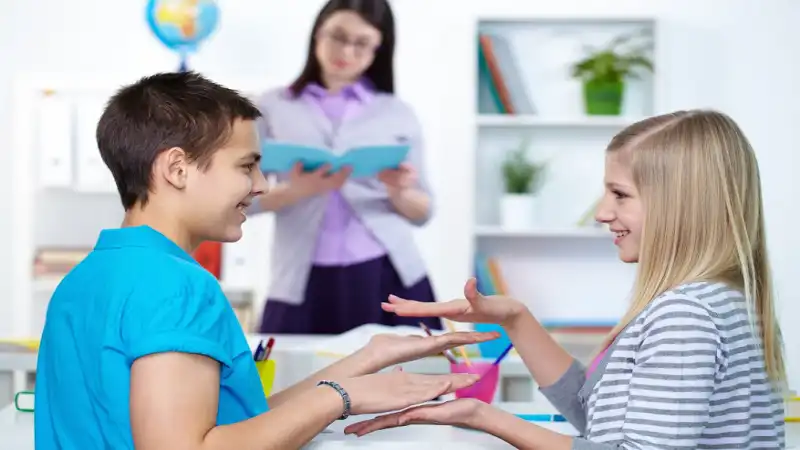
Social Emotional Learning (SEL) is the cornerstone of effective education. It equips learners with robust skills to build relationships, manage emotions, and make life-changing decisions. The learning approach integrates SEL activities that can help adolescents manage increased academic demands, social pressures, and shifting identities. Bright Futures Counselling offers transformational activities that help middle school classrooms stay functional.
For elementary schools, SEL activities help students build foundational skills. These include learning cooperation, identifying emotions, and practicing empathy. On this blog, you will discover activities such as positive affirmations, emotion charades, and compliment circles. These help younger students navigate peer influence and self-image challenges.
Bright Futures Counselling transforms social-emotional learning activities for middle school learners in these five ways.
1. Daily Rituals Help Establish Connection
Daily rituals such as cheerful greetings foster connection and communication. Middle school students use these rituals to connect. Because many adolescents arrive at school with emotional baggage from home, they feel loved when someone checks up on them. Well-structured check-ins, involving short discussions, journal prompts, or digital polls, create space for students to reflect and share their feelings. Through this practice, teachers can identify students requiring more support.
Ideally, Bright Futures Counselling recommends time-tested social-emotional learning activities for middle school that cultivate trust and belonging. Students who practice these activities become better at expressing themselves. The routine implementation of these activities reinforces the notion that classrooms are safe spaces for vulnerable learners. The rituals help normalize conversations about emotions, which encourages empathy and reduces stigma.
2. Collaborative Games Enforce Resilience and Teamwork
Collaborative games are more than powerful tools for keeping learners engaged. They have immersive effects that capture learner attention while building social-emotional skills. Bright Futures Counselling recommends easy-to-implement scavenger hunts and puzzle games. They structure these games to meet the developmental needs of middle school learners. For example, escape-room style tasks and multi-step problem-solving require higher-order thinking. They encourage teamwork and resilience through real-world situations.
These reimagined activities integrate with modern academic learning programs. Combining SEL with subject-based projects makes the learning experiences more meaningful. History-themed scavenger hunts or collaborative STEM challenges allow learners to practice adaptability, communication, and patience. Additionally, collaborative games provide safe environments for learners to navigate group dynamics and develop interpersonal skills. When teachers leverage games requiring shared responsibility and cooperation, they can cultivate a culture of respect and inclusivity.
3. Self-Talk and Reflections Reinforce Mental and Social Skills
Many middle school students struggle to navigate complex academic and social environments. Bright Futures Counselling offers structured programs to empower self-talk and reflections. Students can discover effective opportunities that explore their emotions and thoughts. These include journaling, which allows learners to process their experiences with more ease. It also gives them a chance to articulate victories and challenges simply. The practice strengthens self-awareness while enabling students to identify patterns in their thinking.
Vision boards are also an effective method that offers a creative outlet for students to visualize goals and aspirations. These boards connect tangible images and symbols with affirmations, ensuring adolescents can anchor self-talk in concrete representations. The activity encourages learners to think beyond immediate challenges and focus on long-term growth.
Structured discussions are another effective method that enhances the impact of affirmations. Adolescents struggling with negative inner dialogue, such as academic pressures and peer comparisons, can benefit from guided conversations. Counsellors and teachers use these programs to understand earners and guide them into making more confident decisions.
4. Offers Teacher-Friendly Resources
The biggest challenge in implementing SEL lies in teacher workload. Teachers must manage intricate tasks such as parent communication, lesson planning, grading, and classroom management. Adding SEL to the picture complicates things. Bright Futures Counselling simplifies the challenge by designing and offering resources that stand out. The ready-to-use lesson plans, digital activities, and worksheets allow effortless implementation. Teachers no longer need hours of preparation to implement these materials. Efficient SEL integration reduces teachers’ workload while making the process natural and seamless.
As Bright Futures Counselling reduces teachers’ planning burden, it empowers them to be closer to students. The resources also make the whole process more realistic. Teachers feel more confident in what they do without worrying whether their activities resonate with students. These programs eliminate uncertainty by offering classroom-tested and research-based materials. The recommended activities can be adopted across different grade levels. They are flexible enough to fit into different teaching styles. Consequently, teachers can build sustainable SEL routines where learners know what to expect and can engage deeply.
Wrapping Up
Middle school is the stepping stone to high school education. It is usually the formative period, where students shape their emotional abilities, identities, and values. In this stage, students require transformative SEL activities. Bright Futures Counselling makes SEL implementation easy and fun. They offer many resources that help teachers cultivate classrooms where learners feel safe and unlimited. Learners in these classrooms can express themselves, learn from their mistakes, and grow into emphatic, confident adults.
The ripple effect of integrating these SEL resources into your middle school training programs extends beyond the classroom. As students master the art of regulating emotions and resolving conflicts, they can communicate more effectively. They can build friendships, become more responsible at home, and create better workplaces in the future. As for teachers, they spent less time managing learning programs and students.
See more riproar