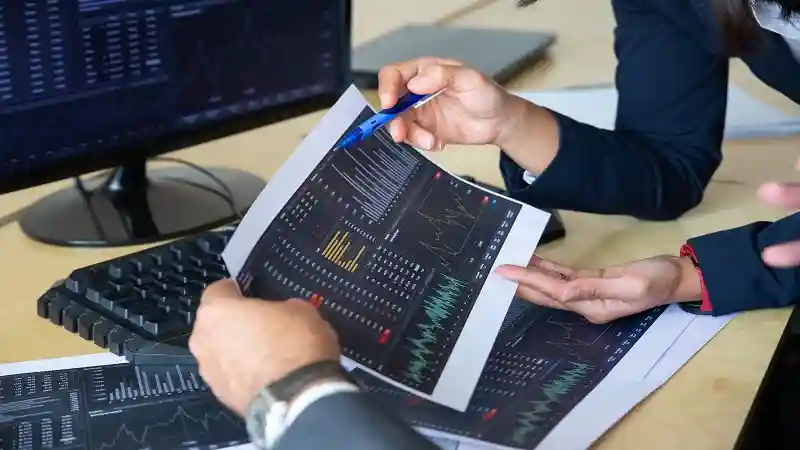
Trading has become an important part of the modern financial world. Many people explore financial markets to understand how prices change, how investments work, and how they can manage their money more effectively. However, successful trading requires more than simply buying an asset low and selling it high. It involves research, planning, patience, risk management, and continuous learning.
The Rprinvesting Trading Guide by Riproar provides a useful starting point for understanding the basic principles of trading. Beginners can use these principles to learn about financial markets, recognize potential opportunities, and make more informed decisions. Experienced traders can also benefit from reviewing fundamental concepts and improving their existing strategies.
Trading does not guarantee profits. Financial markets can move unpredictably, and losses are possible even when a trader follows a carefully prepared plan. Therefore, understanding the risks and developing realistic expectations should always come before investing real money.
This article explains the essential concepts of trading, practical strategies, risk management techniques, common mistakes, and guidelines for developing a disciplined trading routine.
1. Understanding the Basics of Trading
Trading involves buying and selling financial assets with the intention of benefiting from changes in their market prices. These assets may include stocks, currencies, commodities, exchange-traded funds, and cryptocurrencies.
Each market operates differently. Stock prices can respond to company performance, economic conditions, and investor sentiment. Currency prices may change because of interest rates, inflation, political developments, and international trade. Commodity prices can be affected by supply, demand, weather, and geopolitical events.
Before entering any market, beginners should understand how it operates and what factors influence its prices.
Common Types of Trading
Day trading: Day traders open and close positions during the same trading day. This approach requires regular market monitoring, quick decision-making, and careful control of transaction costs.
Swing trading: Swing traders attempt to benefit from price movements that develop over several days or weeks. This approach may require less constant monitoring than day trading, although market conditions can change quickly.
Position trading: Position traders hold assets for longer periods, sometimes for months or years. They generally focus on broader market trends and fundamental developments.
Long-term investing: Although different from short-term trading, long-term investing involves purchasing assets with the intention of holding them for an extended period. Investors often focus on business performance, asset quality, and long-term financial goals.
Choosing an appropriate approach depends on a person’s experience, available time, financial circumstances, and tolerance for risk.
2. Learning How Financial Markets Work
Financial markets connect buyers and sellers. Prices change as participants respond to information, expectations, and shifts in supply and demand.
When more buyers are willing to purchase an asset at higher prices, its price may rise. When selling pressure increases, its price may decline. However, prices can also fluctuate because of unexpected announcements, changes in liquidity, and broader economic conditions.
Traders should become familiar with several basic market terms.
- Market price: The current price at which an asset trades.
- Volatility: The degree to which an asset’s price fluctuates over time.
- Liquidity: How easily an asset can be bought or sold without significantly affecting its price.
- Spread: The difference between the buying price and the selling price quoted in a market.
- Trading volume: The number of units or contracts traded during a particular period.
- Leverage: The use of borrowed funds or margin to control a larger position than the trader’s available capital would otherwise allow.
Leverage deserves particular attention because it can magnify both gains and losses. In some circumstances, losses can exceed the amount a trader initially expected to risk. Beginners should understand the applicable rules and costs before considering leveraged products.
3. Developing a Trading Strategy
A trading strategy is a structured set of rules that helps determine when to enter a trade, when to exit, and how much money to risk. Without a strategy, traders may make decisions based on fear, excitement, or short-term market movements.
A practical strategy should include the following elements.
Define Your Trading Goals
Start by identifying what you want to learn and what you hope to achieve. Beginners should focus on understanding market behavior and following a consistent process rather than expecting immediate profits.
Goals should be realistic and measurable. For example, a beginner might aim to study a particular market, complete several practice trades, or evaluate a strategy over a defined period.
Select a Suitable Market
Avoid attempting to trade every available asset at once. Choose one market and learn its characteristics, trading hours, typical volatility, and major price influences.
A focused approach makes research more manageable and helps beginners recognize recurring patterns without becoming overwhelmed by excessive information.
Establish Entry and Exit Rules
Before placing a trade, decide what conditions must be present for entering the market. Also determine what would indicate that the original trading idea is no longer valid.
Exit rules may include a profit target, a stop-loss level, or a change in the market conditions that supported the trade. These rules help reduce impulsive decisions.
Test the Strategy
Historical testing can show how a strategy might have performed under previous market conditions. However, past performance does not guarantee future results.
After historical testing, practice in a simulated trading environment. Record the results, identify weaknesses, and adjust the strategy carefully rather than changing rules after every losing trade.
4. Using Technical and Fundamental Analysis
Traders commonly use technical analysis, fundamental analysis, or a combination of both to evaluate potential opportunities.
Technical Analysis
Technical analysis examines historical prices, charts, trading volume, and indicators to identify possible trends and patterns.
Common tools include:
- Moving averages: Help summarize price movements and identify potential trends.
- Relative Strength Index (RSI): Measures the speed and magnitude of recent price changes.
- Support and resistance: Refer to price areas where buying or selling pressure has previously appeared.
- Trend lines: Help visualize the general direction of price movements.
- Volume analysis: Examines trading activity to provide additional context for price changes.
These tools are not perfect predictors. Indicators can produce misleading signals, especially during volatile or sideways markets. Traders should avoid relying on a single indicator as the sole reason to enter a position.
Fundamental Analysis
Fundamental analysis evaluates the underlying factors that may influence an asset’s value.
For stocks, this can include revenue, earnings, debt, cash flow, competitive position, and management quality. For currencies, traders may study inflation, employment figures, central bank decisions, and economic growth. Commodity analysis may involve production levels, inventories, weather, and global demand.
Fundamental analysis helps traders understand why prices may change, while technical analysis can help them examine how prices are behaving.
Combining the two approaches may provide a broader perspective, but neither method eliminates uncertainty.
5. Following Essential Risk Management Rules
Risk management is one of the most important parts of trading. Even a strategy that performs well under certain conditions can experience losses during unfavorable market periods.
The Rprinvesting Trading Guide by Riproar emphasizes the importance of protecting available capital and making decisions based on predetermined risk limits.
Risk Only What You Can Afford to Lose
Never trade with money needed for rent, food, education, medical expenses, debt payments, or other essential responsibilities. Borrowing money to speculate can increase financial pressure and make losses more difficult to manage.
Beginners should consider practicing without real money until they understand the mechanics and risks of their chosen market.
Set a Risk Limit for Each Trade
Some traders use a small percentage of their trading capital as a maximum planned loss on an individual trade. For example, a trader with $1,000 who chooses to risk 1% would plan for a loss of approximately $10 if the trade reaches the intended stop-loss level.
This is an illustration, not a recommended amount for every person. Actual losses may be larger because of price gaps, slippage, fees, or market conditions.
Use Stop-Loss Orders Carefully
A stop-loss order is designed to close a position when a specified price condition is reached. It can help control risk, but execution at the exact requested price is not guaranteed in every market.
Traders should understand the order types available through their chosen provider and recognize the possibility of unexpected execution prices.
Diversify Where Appropriate
Concentrating all available funds in one asset or market can expose a trader to substantial losses. Diversification spreads exposure across different assets or types of investments.
However, diversification does not eliminate risk. Assets that appear different can sometimes decline together during periods of market stress.
6. Creating a Trading Plan and Routine
A trading plan turns general ideas into a practical process. It should describe the market being traded, the strategy being used, the conditions for entering and exiting positions, and the limits placed on risk.
A simple daily routine can include the following steps:
- Review relevant economic news and market developments.
- Identify important price levels and possible market trends.
- Check whether any potential trade meets the strategy’s rules.
- Calculate position size and planned risk before entering.
- Monitor existing positions without reacting unnecessarily to every price movement.
- Record completed trades and review the decisions afterward.
A trading journal is particularly useful. It can include the date, asset, entry price, exit price, reason for entering, planned risk, result, and lessons learned.
Over time, these records can reveal repeated mistakes, such as entering trades too early, exiting profitable positions too quickly, or taking excessive risks after a loss.
7. Managing Emotions During Trading
Trading can create strong emotional reactions because money is involved and outcomes are uncertain. Fear may cause someone to exit a position too early, while greed may encourage them to hold a trade beyond their original plan.
Another common problem is revenge trading, which occurs when someone attempts to recover a loss quickly by taking additional positions without proper analysis.
To manage these challenges, traders should establish clear rules before the market becomes stressful.
- Take breaks after emotionally difficult trades.
- Avoid increasing position sizes simply to recover losses.
- Accept that losing trades are part of trading.
- Evaluate decisions according to the quality of the process, not just the outcome.
- Stop trading when predefined daily or weekly loss limits are reached.
Discipline does not mean predicting every market movement correctly. It means following a reasonable process and responding to new information without abandoning risk controls.
8. Common Trading Mistakes to Avoid
Beginners often make avoidable mistakes because they enter financial markets before developing sufficient knowledge or experience.
Trading without research: Entering positions based on rumors, social media posts, or unsupported predictions can lead to poor decisions. Research should come before action.
Using excessive leverage: Larger positions can magnify small price movements into significant losses. Understand leverage and margin requirements before using them.
Ignoring transaction costs: Spreads, commissions, financing charges, and other fees can reduce returns, especially for frequent traders.
Changing strategies too often: A strategy cannot be evaluated fairly if its rules change after every loss. Test it systematically and make adjustments based on evidence.
Expecting guaranteed profits: No legitimate trading method can eliminate uncertainty from financial markets. Claims of guaranteed returns should be treated with skepticism.
Neglecting recordkeeping: Without a trading journal, it becomes difficult to identify weaknesses or determine whether a strategy is working as intended.
Avoiding these mistakes will not guarantee success, but it can help traders develop more thoughtful and controlled habits.
9. Guidelines for Beginners
The Rprinvesting Trading Guide by Riproar can be approached as a learning framework rather than a promise of financial results. Beginners should progress gradually and avoid risking money before they understand the basic concepts.
Follow these practical guidelines:
- Learn the terminology and rules of your chosen market.
- Study one strategy at a time instead of collecting numerous unrelated techniques.
- Use a demo account to practice placing and managing trades.
- Keep written records of decisions and outcomes.
- Understand the costs, tax obligations, and legal requirements that may apply in your location.
- Verify that any broker or trading service is properly regulated where required.
- Protect account credentials and enable available security features.
- Review your results regularly and recognize when a strategy needs further testing.
- Never assume that online testimonials or impressive profit screenshots prove a method is reliable.
- Seek qualified financial advice when decisions involve substantial savings or complex financial products.
A gradual learning process helps reduce unnecessary mistakes and provides a stronger foundation for future decisions.
Conclusion
Trading requires education, planning, patience, and an honest understanding of financial risk. Learning how markets operate, developing a consistent strategy, using suitable analytical tools, and controlling position sizes can help people make more informed decisions.
The most useful approach is to begin with clear goals, practice in a simulated environment, and maintain a detailed trading journal. Traders should also understand that no indicator, strategy, or market forecast can guarantee profits.
The Rprinvesting Trading Guide by Riproar serves as a starting point for exploring these fundamental principles. By applying disciplined habits, avoiding common mistakes, and continuing to learn, beginners can build a more structured approach to financial markets. The ultimate priority should be making informed decisions and protecting financial well-being rather than chasing quick profits.